

PET (Polyethylene Terephthalate) - VOPTASCH

What Is PET
Chemical formula: (C₁₀H₈O₄)ₙ, a polymer made by repeating units of terephthalic acid and ethylene glycol.
CAS Number: 25038-59-9
Structure: A linear polyester chain. Each repeating unit contains a rigid aromatic ring (from terephthalic acid) joined by ester bonds to a flexible ethylene glycol segment. The rigid ring gives PET its strength and heat resistance, while the flexible segment lets it be melted and molded.
PET is produced by polycondensation of purified terephthalic acid (PTA) or dimethyl terephthalate (DMT) with monoethylene glycol (MEG). For grades using solid-state polycondensation (SSP), the melt is first converted into pellets and crystallized. SSP then increases molecular weight and intrinsic viscosity in the solid state.
Bottle grade: high intrinsic viscosity, for water, soft drink, and food containers.
Fiber grade: lower viscosity, for polyester staple fiber and filament yarn.
Film and sheet grade: for packaging film, thermoformed trays, and industrial sheet.
Recycled content (rPET): available on request depending on supply.
Where and How PET Is Used
Chips are dried, melted, and injection molded into small test-tube-shaped preforms. The preforms are reheated and stretch blow molded into bottles. This stretching aligns the polymer chains, giving the bottle its strength and clarity.
Used for jars, trays, clamshells, and blister packs, mainly through injection molding or thermoforming of extruded sheet.
Melted PET is extruded through fine spinnerets to make staple fiber and filament yarn, used in clothing, home textiles, carpets, nonwovens, and fill material.
Extruded and stretched into films for packaging, labels, lamination, electrical insulation, and photographic or industrial uses.
Extruded into strapping bands, monofilaments, and technical products that need high strength and dimensional stability.
Handling and Storage
PET resin is generally regarded as non-hazardous in solid form. Molten PET can cause burns, and fine dust can irritate eyes and airways.
Store in sealed bags in a dry, cool place away from direct sunlight and moisture. Keep packaging closed until use to limit moisture pickup.
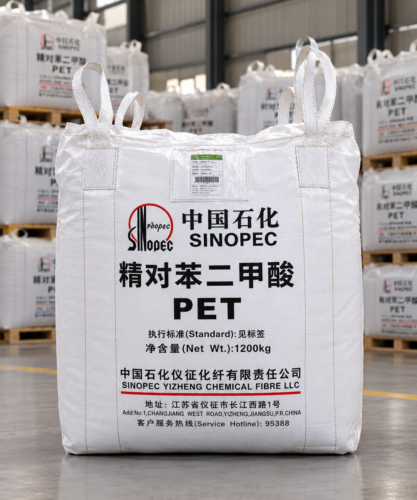
Typically supplied in bulk bags or 25 kg bags. Packaging options available on request.
Why PET Is Used
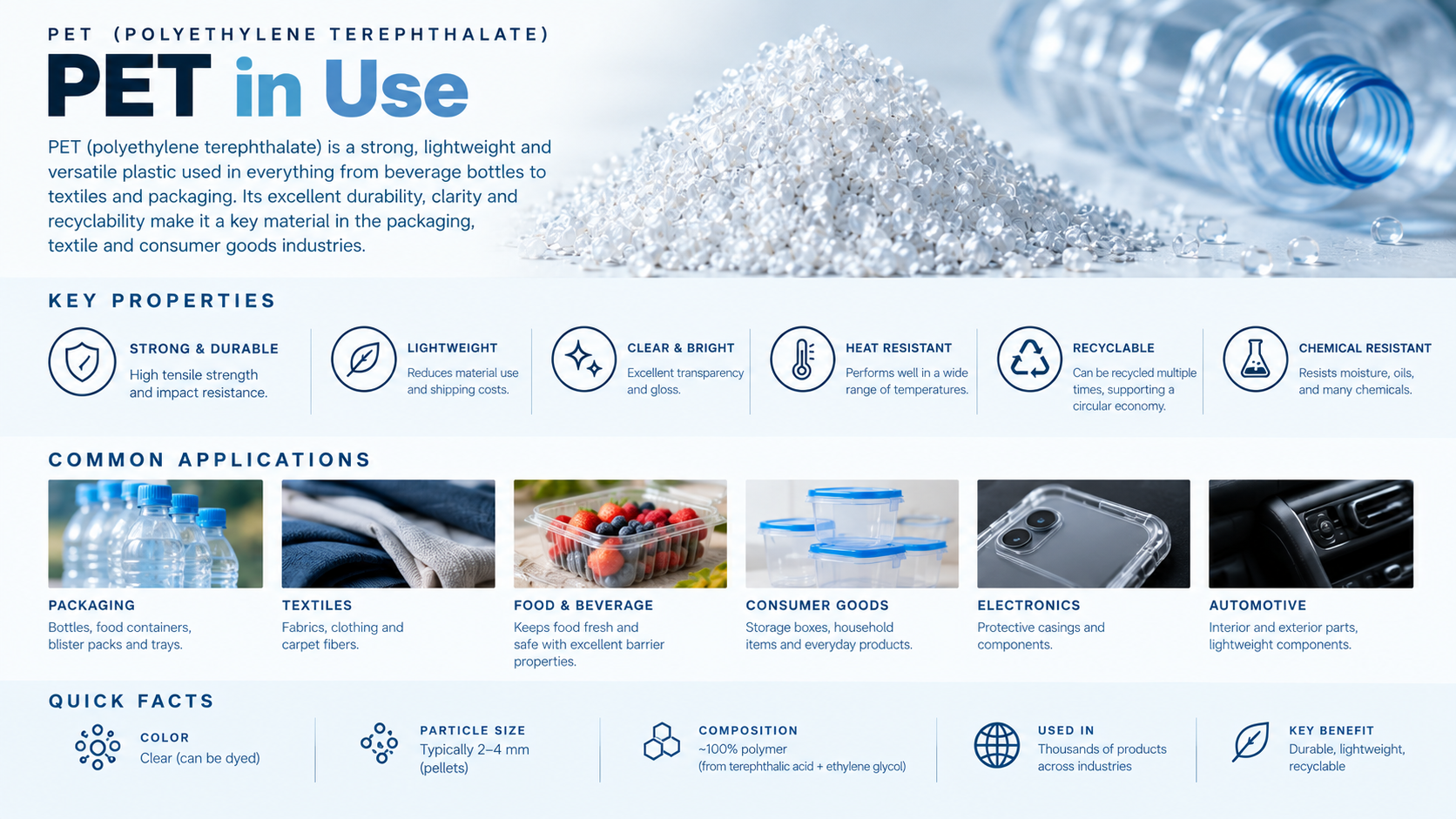
PET offers high tensile strength and impact resistance at a fraction of the weight of glass, which lowers transport costs and breakage losses.
PET can be processed into highly transparent products, so contents stay visible and attractive on the shelf.
PET is a good barrier against moisture and carbon dioxide, which keeps carbonated drinks fizzy and helps extend the shelf life of food.
PET is one of the most recycled plastics in the world and can be reprocessed into new bottles, fibers, and sheet.
Food-grade PET is widely used for food and beverage contact. Compliance for a specific grade should be confirmed with the supplier's documentation for the target market.
Typical Properties
Colorless to slightly milky cylindrical or granular chips
Typically about 0.72 to 0.86 dl/g for bottle grades, lower for fiber grades
Approximately 245 to 260°C
Approximately 70 to 80°C
Approximately 1.33 to 1.45 g/cm³ depending on crystallinity
PET absorbs moisture and must be dried (typically below 50 ppm) before melting, otherwise the molecular weight drops and the product becomes brittle.
HOW A PRODUCT IS DELIVERED
Voptasch oversees the transportation of cargos connecting suppliers and producers with points of consumption. The Shipping and Chartering Desk at Voptasch arranges transportation issues, both for suppliers and for customers.
We are committed to delivering our customers’ products at the agreed time and in accordance with the agreed quality specifications.
Our business model relies on being able to deliver products consistently, safely and responsibly. If we were to supply off-specification products we might suffer financial penalties or find them rejected by customers.
The reputational and societal consequences could be even more significant.